



These Three Schemes of the Ruling Congress Government Are Responsible for It
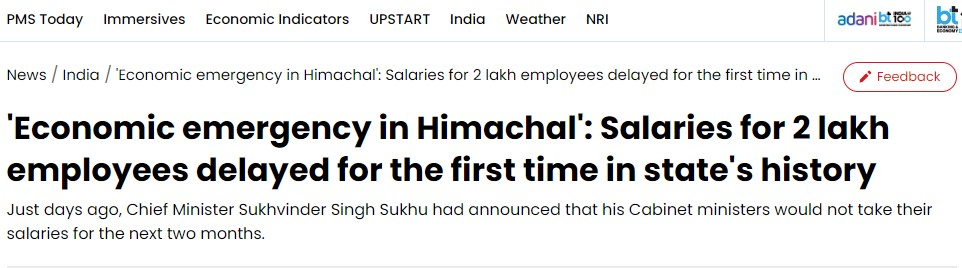
Recently, for the first time in the history of Himachal, the state government could not deposit salaries and pensions to its employees on the first of the month.
What Went Wrong?
Suppose your monthly salary is Rs 50,000, and your monthly expenses are Rs 70,000.
What Should You Do?
Obviously, you should reduce your expenditure and immediately bring it below Rs 50,000.
But What If…
You don’t reduce your expenditure and take a debt of Rs 20,000 to meet your expenses.
What Will Happen?
Next month, your expenditure will increase to Rs 75,000 since you have to pay interest on the debt as well, but your income remains the same at Rs 50,000.
Now What to Do?
You again take on another debt of Rs 25,000, but you don’t reduce your expenditure. Next month, your expenditure will increase to Rs 80,000, and you will fall into a debt trap.
Himachal did exactly the same.
Himachal’s Financial Situation
Himachal’s total annual revenue is around Rs 42,000 crore. This means the state’s annual “salary” is Rs 42,000 crore, and it has to run the state with this amount. When Sukhu became CM in 2022, there was already a debt of Rs 73,500 crore on Himachal, and a large part of the annual revenue was going solely to pay interest on this loan and to provide salaries and pensions to employees.
The first thing Sukhu needed to do was cut all useless expenditures.
But Sukhu Did the Opposite
Rahul Gandhi made many unreasonable and impractical promises during the elections, and the responsibility to fulfill these promises was given to CM Sukhu.
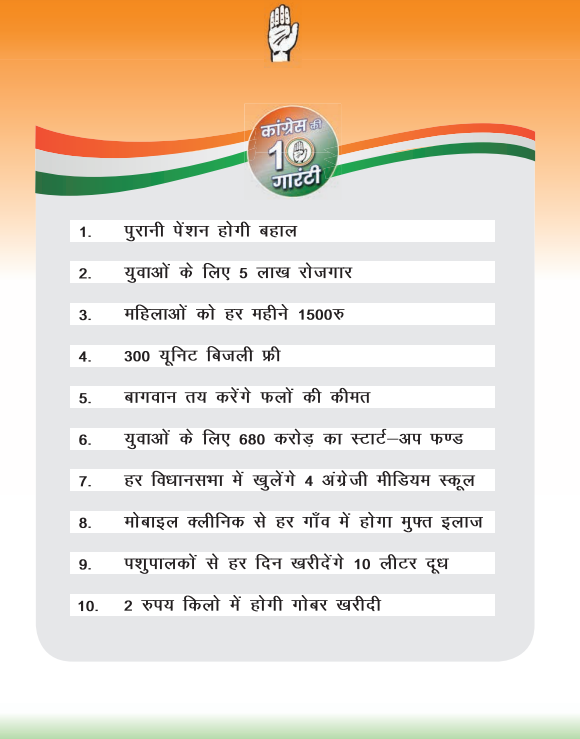
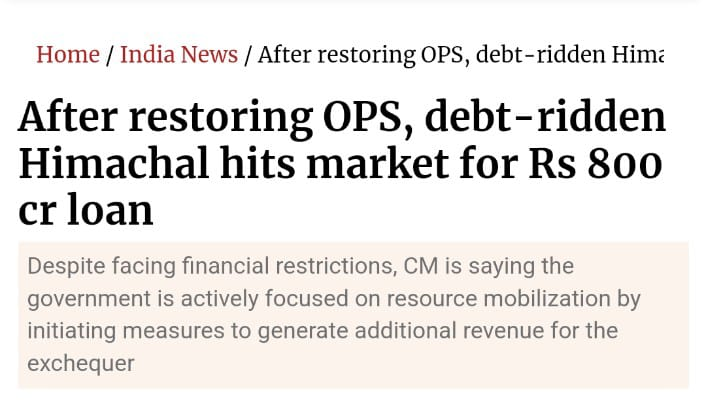
Old Pension Scheme (OPS)
Sukhu restarted OPS, costing the state an additional Rs 1,000 crore per year.
Due to this, the Centre also reduced the state’s borrowing limit by Rs 5,500 crore, from Rs 14,500 crore to Rs 9,000 crore (5% of its GDP to 3.5%).
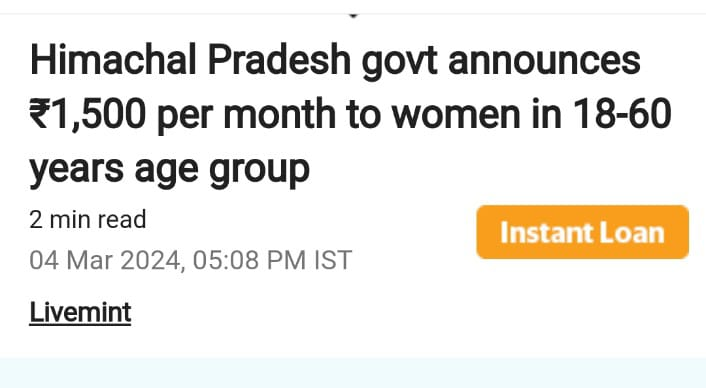
Rs 1,500 PM Khatakhat Scheme
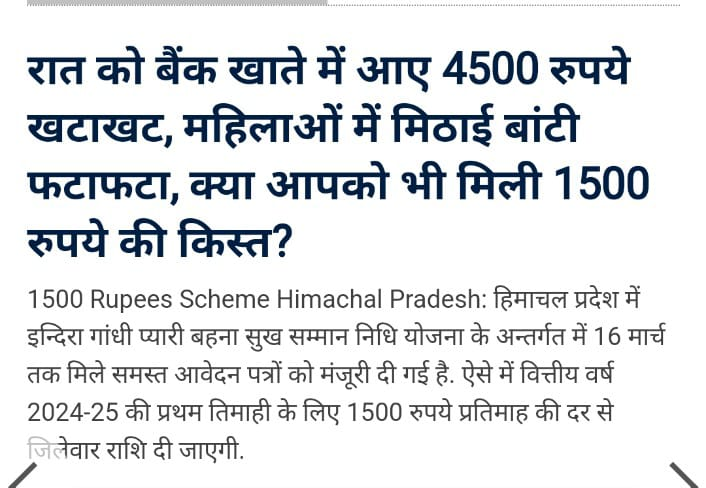
The state government fulfilled five election promises, including the Rs 1,500 monthly allowance for five lakh women, which costs around Rs 800 crore annually. This scheme started this year.
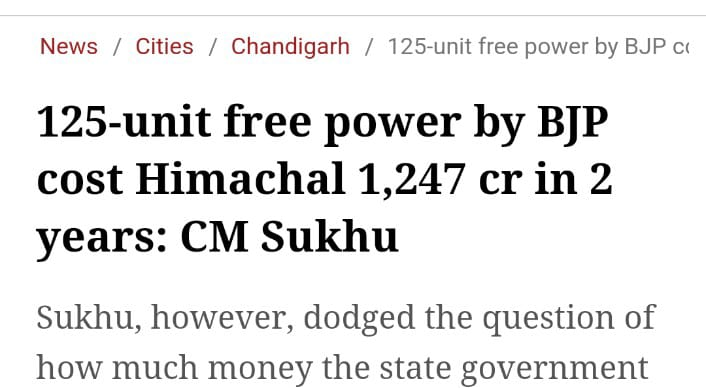
Free Electricity
The previous BJP government was providing 125 units of free electricity. Congress promised 400 units of free electricity. Although Congress did not provide 400 units, it continued the 125 units scheme. The power subsidy cost the state electricity board Rs 1,800 crore in FY24.
Instead of reducing expenditure, the Sukhu government kept increasing it, taking on further debts.
Rising Debt
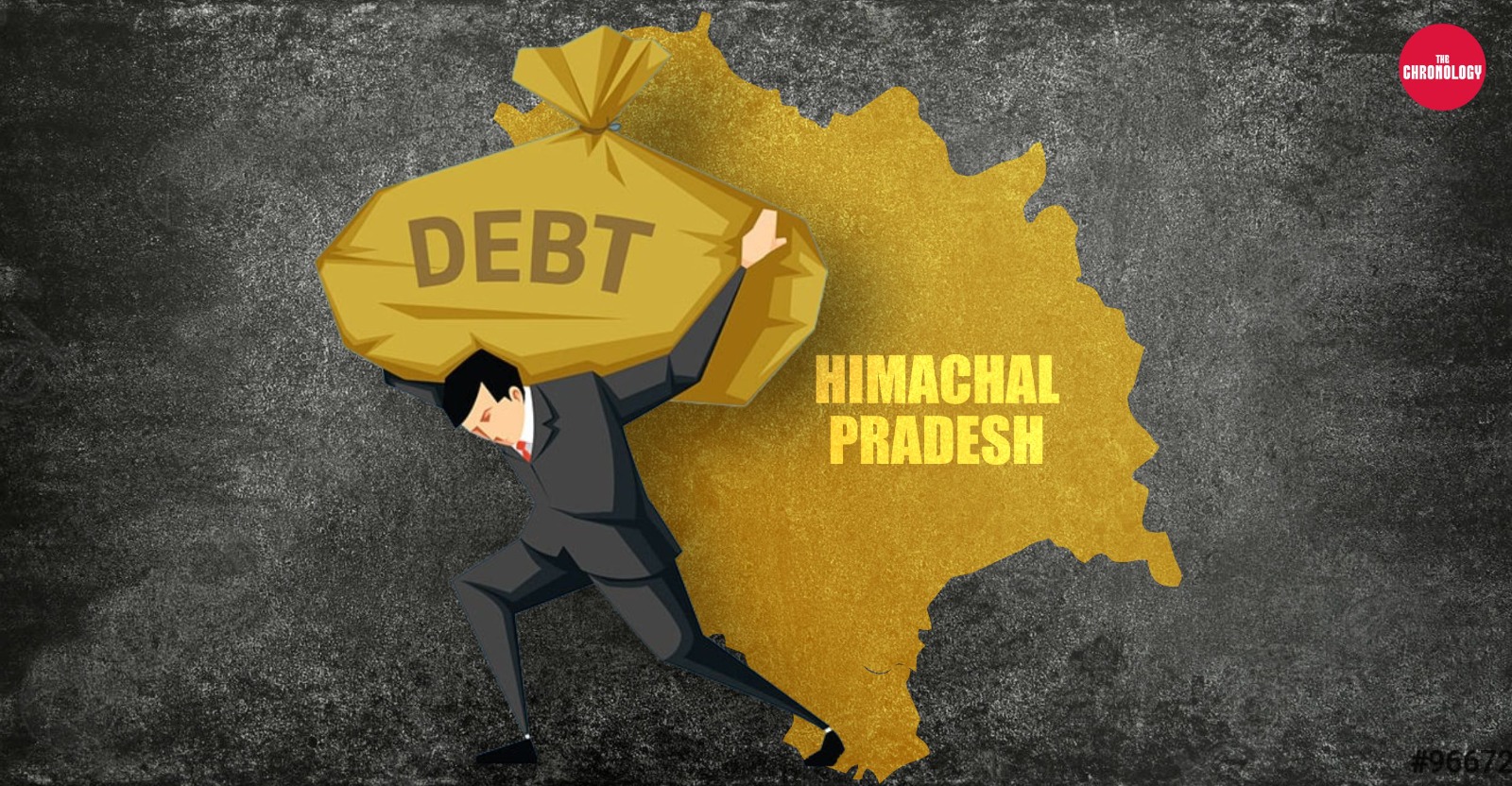
The state’s debt was Rs 47,000 crore in 2018, Rs 73,500 crore in 2022, and it has now increased to Rs 86,500 crore.
Now, most of Himachal’s revenue goes into repaying debts and interest. The per capita debt in Himachal stands at Rs 1.17 lakh per person, making it the highest in the country after Arunachal Pradesh.
The government spends Rs 20,639 crore on salaries, with pay, pensions, and interest payments consuming 46.3% of the total budget for FY24.
A Case Study for India
Himachal is a case study for the entire country on what happens when you keep increasing your expenditure to fulfill impractical election promises and even take on debt to fulfill them.
Himachal is not alone; many other Indian states are also in the same situation.