


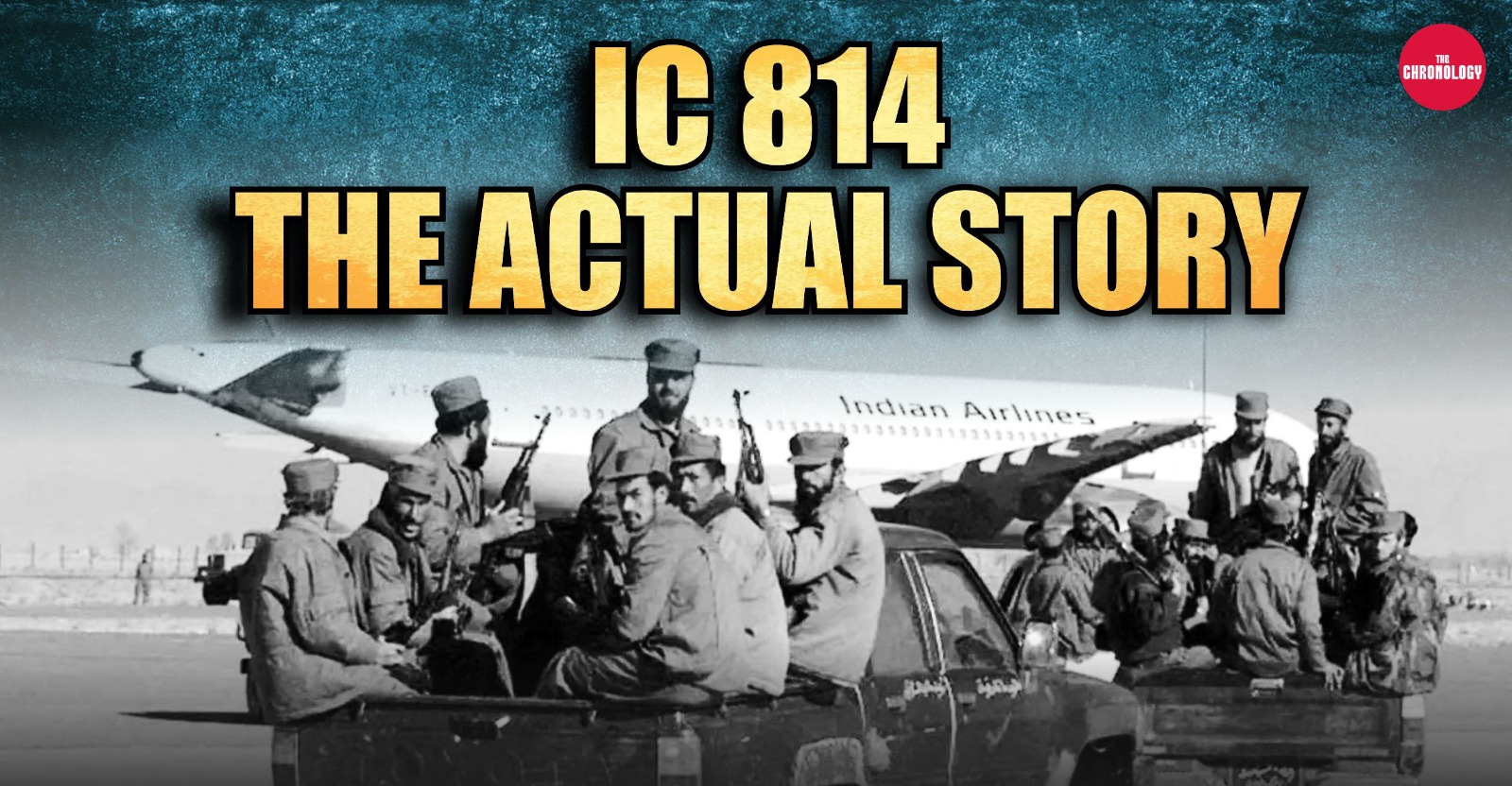

This Article is based on the actual events that occurred between December 24th – 31st involving Air India’s IC814 flight, which was hijacked by Pakistan-based terrorist groups. We will present all the details as they are—no code names, no cover-up propaganda.
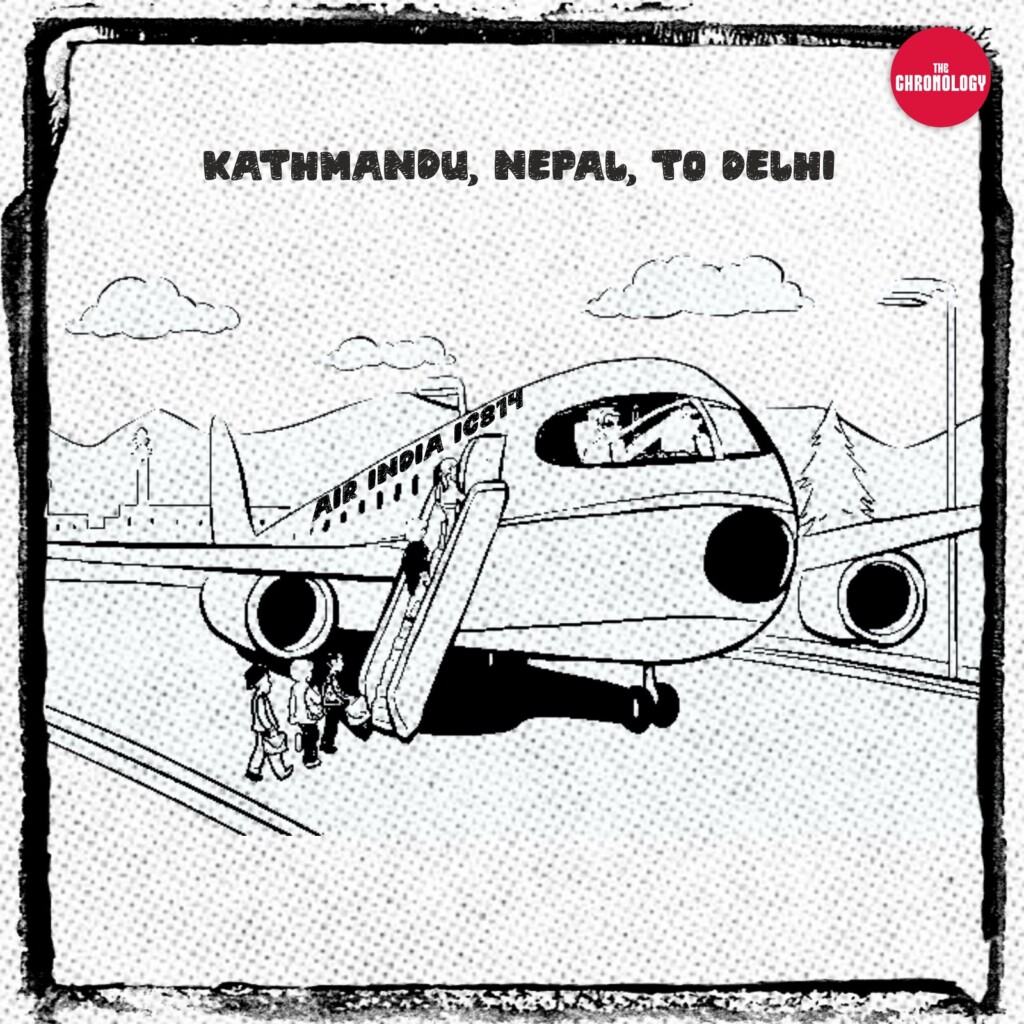
December 24th, 1999 4:00 PM Indian Airlines flight IC 814 took off from Kathmandu, Nepal, bound for Delhi.
The aircraft carried 190 occupants, which included 179 passengers and 11 crew members. The crew consisted of:
- Captain Devi Sharan
- First Officer Rajinder Kumar
- Flight Engineer Anil Kumar Jaggia
Passengers also included foreign nationals; among them was Roberto Giori, the then-owner of De La Rue, a company that controlled the majority of the world’s currency-printing business at the time. Please read this thread to learn more about De La Rue.
The flight was also carrying five members of Harkat-ul-Mujahideen (HuM), a Pakistan-based jihadi terrorist organization. This group was part of Al-Qaeda South Asia and was also involved in the 9/11 attacks on the USA. Their aim is to establish Ghazwa e Hind.
Real names and (code names) of the hijackers were:
- Ibrahim Athar (Shankar)
- Shahid Akhtar Sayeed (Bhola)
- Sunny Ahmed Qazi (Chief)
- Mistri Zahoor Ibrahim (Burger)
- Shakir (Doctor)
All five were Pakistani citizens and used their code names throughout the entire operation. At that time, Kathmandu was a major operational base for Pakistan’s ISI and a hub for other illegal activities. The entire operation was planned two months in advance. Hijackers and their associates made several trips to Kathmandu during this period. Initially, it was planned for December 27th, but later, they changed the date to December 24th. Tickets for the hijackers were booked through three different tour agencies under false aliases. Access to the airport was facilitated by Dawood Ibrahim.
Timeline of the Hijacking:
- 4:39 PM: The plane entered Indian airspace.
- 4:53 PM: The hijackers entered the cockpit with revolvers and informed the pilot that the plane had been hijacked.

- 4:56 PM: Delhi Air Traffic Control was informed.
- 6:04 PM: The captain radioed the Indian ATC that they had only one hour of fuel left and that the Pakistani ATC had refused permission to land at Lahore. However, the hijackers did not want to land in India and threatened to execute ten hostages if their demands were not met.
- 6:25 PM: The Indian crisis management group, led by Union Secretary Prabhat Kumar, informed the National Security Guard (NSG) to prepare for a possible rescue mission.
- 7:10 PM: After being told that there was insufficient fuel to go further, the hijackers allowed the captain to land at Amritsar. The flight landed at Amritsar, where the pilot asked for refueling. However, there was a delay in the refueling process, which angered the hijackers, leading them to stab a German citizen, Satnam Singh, and an Indian, Rupin Katyal, causing several wounds. The aircraft’s engines were kept running, and the plane remained on the runway.
- 7:47 PM: India’s plan was to stop the plane at Amritsar, but the hijackers threatened to kill hostages if the pilot didn’t fly. To prevent them from harming the passengers, the pilot took off from Amritsar.
- 8:01 PM: Despite no clearance from Pakistan, the plane landed at Lahore. India requested Pakistani forces not to allow the plane to fly and sent a team, but Pakistan deceived India. Pakistan refueled the plane and allowed it to fly.


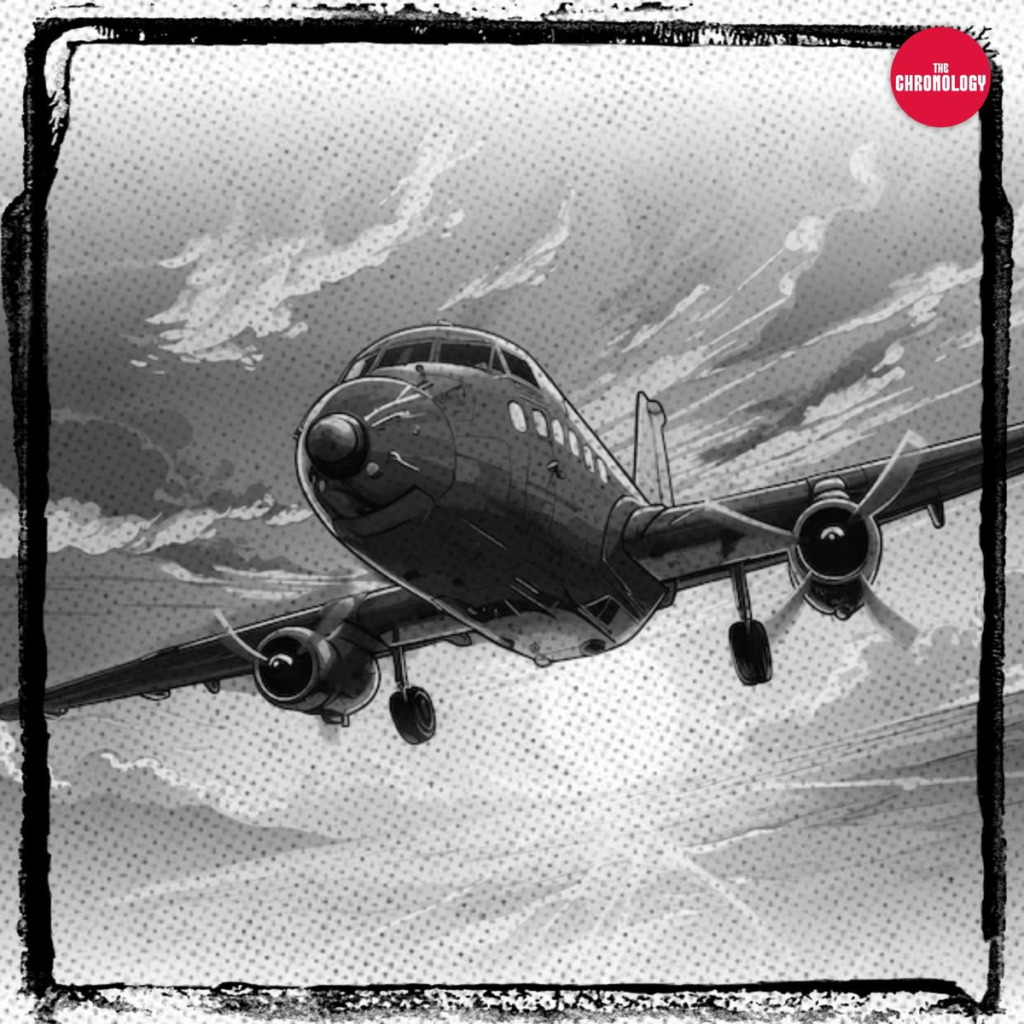
- 10:32 PM: The plane took off from Lahore. The hijackers asked the pilot to land at Kabul Airport, but since Kabul airport didn’t have a night landing facility, they directed the plane toward the Gulf.
December 25th, 1999
- 1:32 AM: The flight landed at Dubai airport. The hijackers released 27 passengers in exchange for fuel. The bodies of Rupin Katyal and Satnam Singh, who had been critically injured earlier, were also released.
- 6:20 AM: India attempted to execute a rescue mission again, but Dubai did not cooperate. The flight left Dubai.
- 8:33 AM (IST): The flight landed at Afghanistan’s Kandahar airport, which was under the control of the Taliban. Armed members of the Taliban surrounded the aircraft to prevent an Indian military operation against the hijackers. The plane remained at Kandahar on December 25th and 26th. The plane’s engine was kept running continuously to provide lighting and heating as temperatures dropped during the nights.
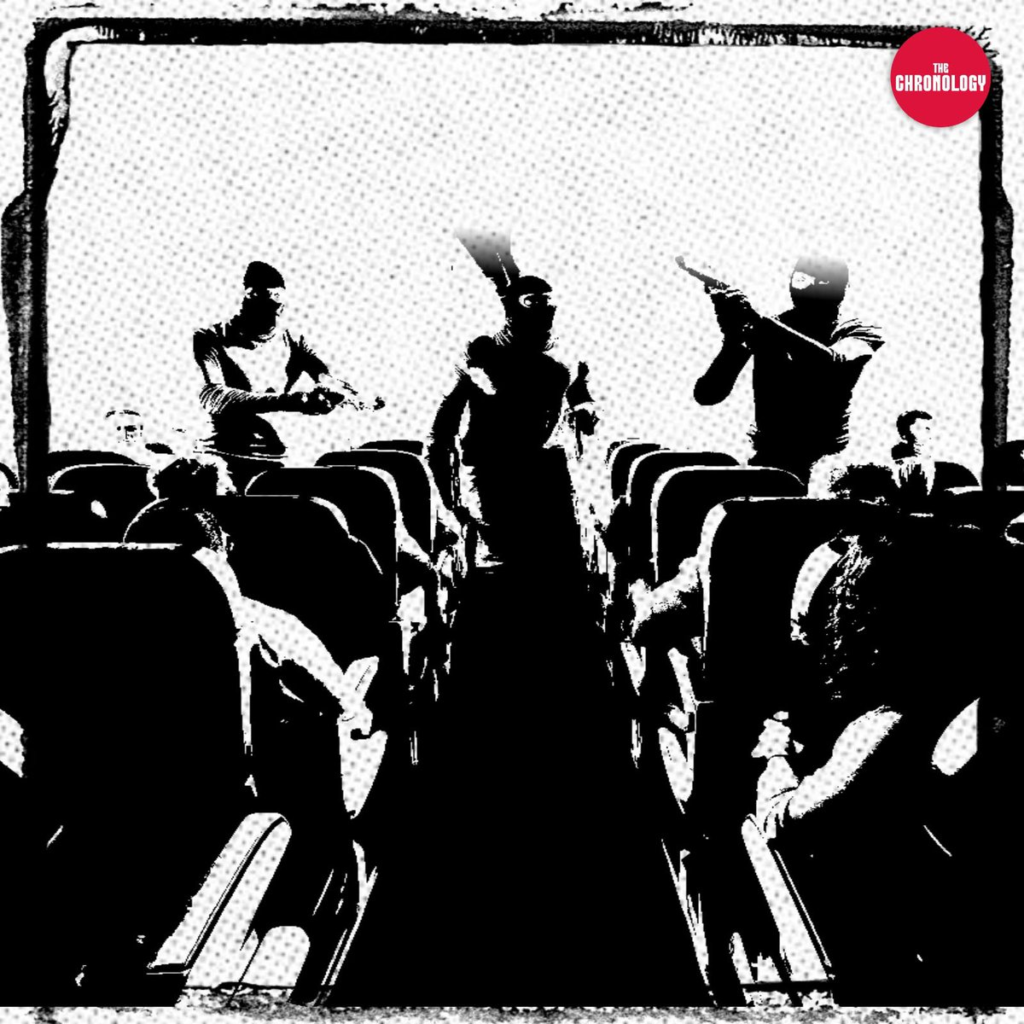
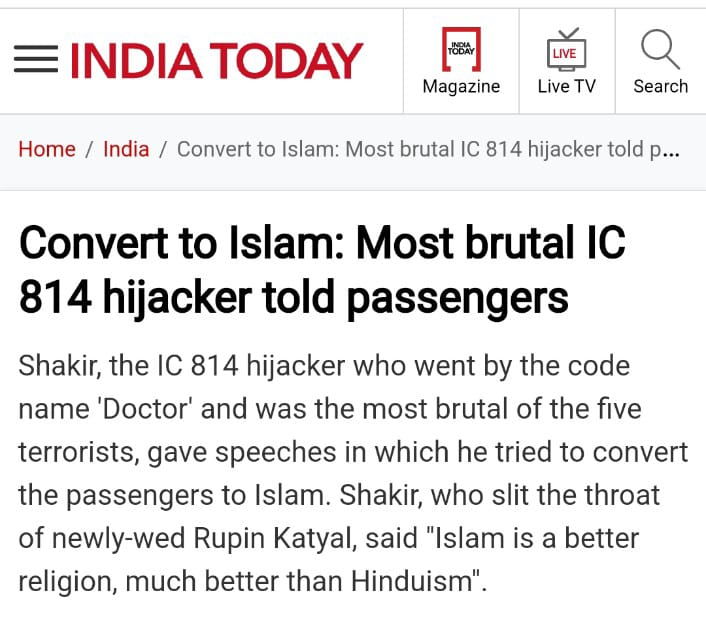
The hijackers were extremely cruel, especially toward Hindu passengers, denying them proper meals, water, and sanitation facilities. They also utilized the public announcement system on board to spread the message of Islamic jihad and asked passengers to convert to Islam.
December 27th A team of negotiators, headed by Vivek Katju, Joint-Secretary in the Ministry of Home Affairs, along with officials Ajit Doval and C.D. Sahay, arrived in Kandahar for negotiations. To prevent any military action, Taliban officials later surrounded the aircraft with tanks. The hijackers made three demands:
- The release of 36 prisoners lodged in various Indian jails.
- The return of the body of HuM founder Sajjad Afghani.
- US$200 million in cash.
Through further negotiations, the demands were ultimately reduced to the release of three prisoners:
- Masood Azhar
- Omar Sheikh
- Mushtaq Zargar
December 30th RAW chief A. S. Dulat spoke to Omar Abdullah, and the three prisoners were released and flown to Kandahar. As the hijackers received these three men, they de-boarded the plane and surrendered their weapons to the Taliban. The Taliban gave them 10 hours to leave the country and drove them to the Afghanistan-Pakistan border. The hijackers went to Pakistan. All hostages were safely returned to India.
The three released terrorists and the hijackers have since been implicated in other terrorism related incidents such as
- 2001 Indian Parliament attack
- 2002 Murder of Daniel Pearl
- 2008 Mumbai attacks
- 2016 Pathankot attack
- 2019 Pulwama attack
Masood Azhar later founded Jaish-e-Muhammed (JeM) in 2000
Captain Sharan was awarded the 1999 Safe Skies Award. Al-Qaeda, led by Osama bin Laden, provided organizational support for the hijacking, and the incident was seen as a precursor to the 9/11 attacks on the USA.
India suspended all flights to and from Kathmandu after the hijacking. The airline resumed its Kathmandu services after five months, on June 1, 2000. This hijacking was a prelude to the 2001 9/11 attacks.
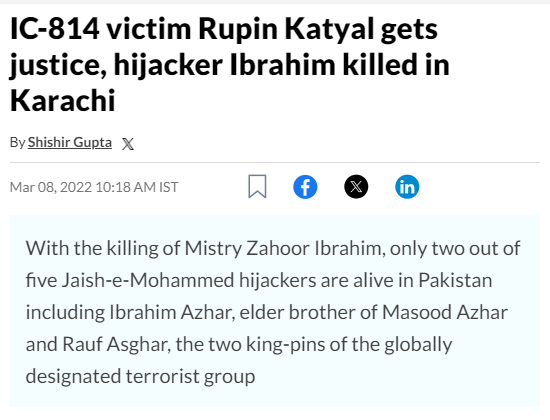
25-year-old Rupin Katyal, who was returning with his wife from their honeymoon in Kathmandu, was killed in IC 814 by Mistri Zahoor. Pakistan never arrested or took action against these five terrorists, and they continued to live in Pakistan.
Ajit Doval later stated that the hijackers were receiving active support from the ISI in Kandahar and that the ISI had removed all the pressure India was trying to put on the hijackers, guaranteeing their safe exit, leaving no need for them to negotiate an escape route.
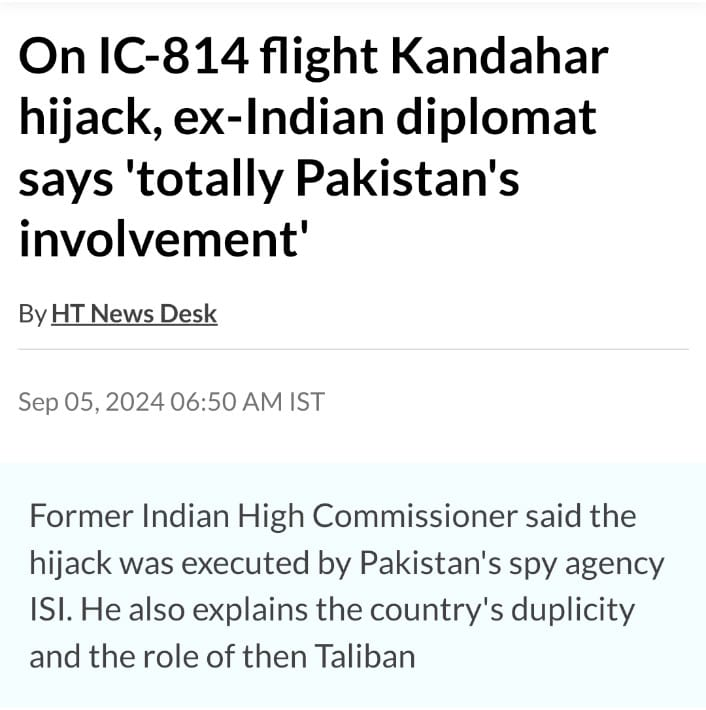
He also stated that if the hijackers were not receiving active support from the ISI, India could have resolved the hijacking.
The Kandahar Hijacking was a plan by the ISI to release these three terrorists and to bleed India.